We are a NC ESA+ approved vendor!
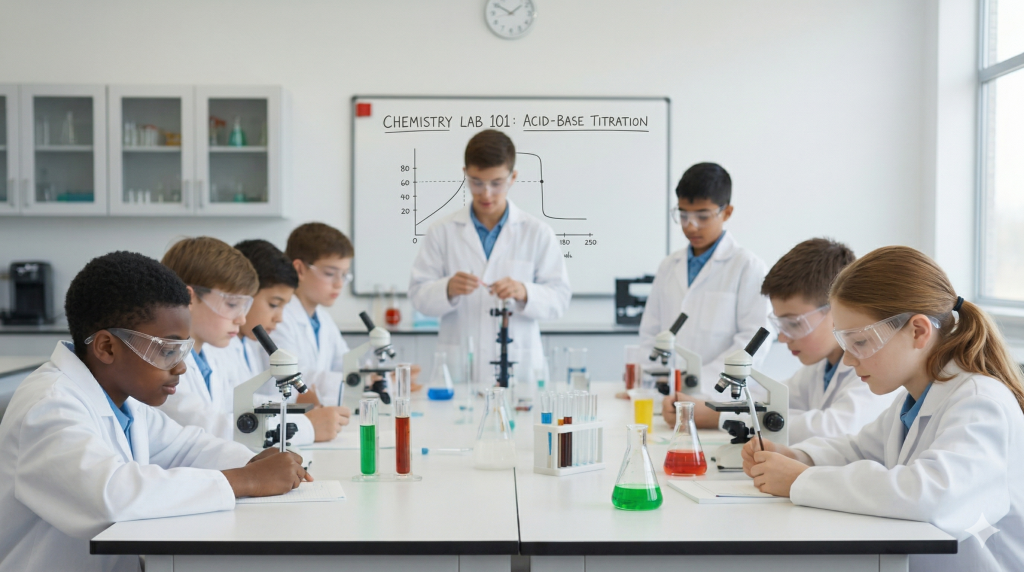
Dive into the wonders of life science with a hands-on, lab-based experience designed just for middle schoolers! This course moves beyond the textbook, allowing your student to actively do science and explore the living world through exciting, tangible experiments. They will develop foundational analytical skills and a genuine curiosity for biology and chemistry.
What Your Student Will Master
- Scientific Modeling and Observation: Students will learn to build and use models, such as organ systems or atomic structures, to visualize and document complex biological and chemical processes.
- Earth Science Foundations: Students will analyze the physical layers of the Earth and the forces of weathering and erosion to understand how geological processes shape our planet.
- Physical Science Principles: Students will master the laws of motion, velocity, and energy transfer by investigating how objects interact in the physical world.
- Chemical Literacy: From mastering the periodic table to understanding pH scales, students will gain a working knowledge of how substances interact at a molecular level.
- Biological Systems: Students will investigate the “machinery of life” by exploring how enzymes function and how vital organs like lungs and kidneys maintain the body.
Why Science Lab Matters:
- Fueling Natural Curiosity: By asking “what would happen if?”, students transition from passive observers to active investigators of the natural world.
- Practical Application: We use common everyday objects and nature as examples, ensuring students see the science happening in the world around them.
- Hands-On Experience: Students manage lab safety and precision equipment under the guidance of a teacher with over 20 years of classroom and homeschooling experience.
This class is ideal for:
- Homeschool students completing science at home who need a lab component
- Families using a textbook or online science course without labs
- Students who learn best through hands-on science
Planned Lab Dates (Subject to change):
September 11: Minerals & Crystals and the Magic of Supersaturation – Explore the process of super-saturation by dissolving extra solute to grow minerals.
September 25: Earth’s Layers – Using Candy to Understand Geology! – A hands-on modeling activity to visualize the internal structure of our planet.
October 9: Weathering & Erosion – Landslides and Prevention – Investigate how water and wind change the landscape and how humans can prevent erosion.
October 23: Velocity and Measuring Speed with Dominoes! – Use physical objects to calculate speed and understand the basics of motion.
October 30: Laws of Motion – Make a Catapult – Build a simple machine to observe Newton’s laws in action.
November 13: Waves – Energy in Motion – Study how energy travels through different mediums using hands-on demonstrations.
(break)
*January 22: Chemical Solutions and Mixtures – Observe how different substances combine or dissolve to create new solutions.
*February 12: Make a Periodic Table Model – Create a visual tool to understand the elements and their atomic properties.
*February 26: Understanding and Observing Chemical Reactions – Mix substances to identify signs of a chemical change, like gas production or color shifts.
*March 19: Biochemistry – Enzymes and pH – Use indicators to test the acidity of liquids and explore how catalysts drive biological reactions.
*April 9: The Magic of Soap Protecting Us – Discover how soap’s special molecular structure allows it to trap and wash away grease and dirt.
*April 23: Lungs and Kidneys – Making Models of Organs – Build working models to understand the filtration and respiration processes of the human body.
*Spring Meeting times to be confirmed with the Town Hall November 2026
Students are expected to participate actively, respect instructors, and follow all lab safety guidelines.